
A business owner spends four months getting their website rebuilt. Their team adds new copy, better photos, and speeds up the loading. As a result, the site ranks on page one for several search terms they care about. But a competitor with a noticeably thinner website still shows up above the business, in the three-listing block on top of the page, and gets more calls because of it.
This is different from organic rankings, because the original website still has them beat on that. The stronger website still wins, but if the corresponding Google Business Profile is thin, outdated, or less trusted than the businesses around it, the website may never get the chance to do its job.
That is why understanding how to fully optimize your Google Business Profile is not a side project for local SEO. It is often the first place to look when calls are going to competitors with weaker websites.
What Google Maps SEO Actually Is
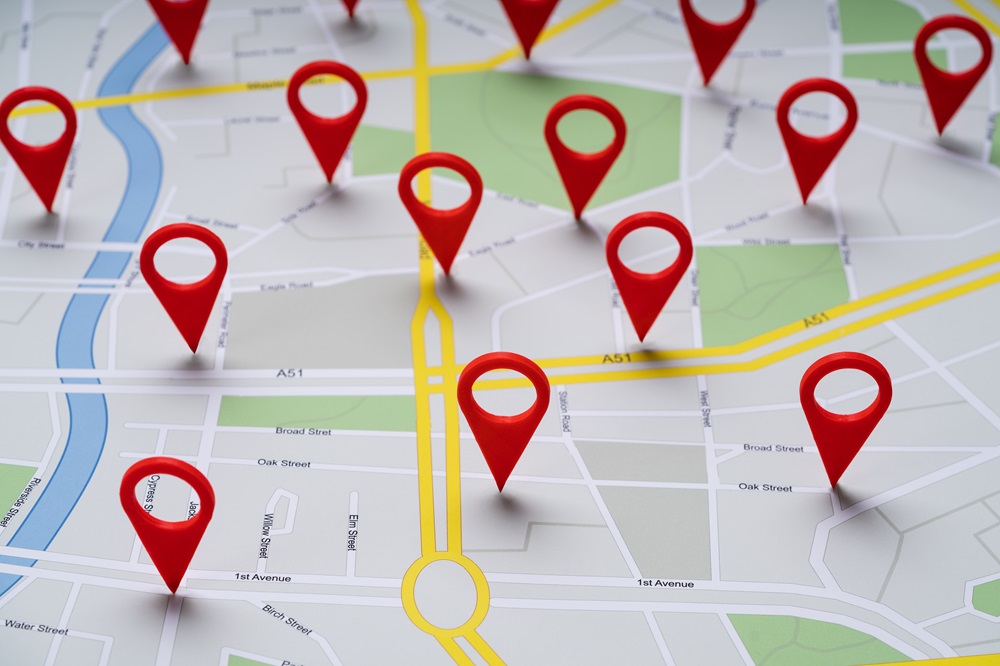
When someone searches for a local service, such as a plumber, dentist, contractor, or restaurant, Google often returns a map with three business listings before the organic results. That’s called the Map Pack, or the local three-pack. It shows the business name, rating, address, phone number, hours, and a directions link. On mobile, there’s also a call button right there.
Google Maps SEO is the practice of improving your business presence so you appear in the map pack for the searches that matter to your service area. It’s linked to organic SEO, but not exactly the same.
A business can have a useful website and still lose Map Pack visibility because the profile is incomplete, reviews are stale, categories are wrong, or citations across the web do not match. Most businesses assume it’s just a one-time, set-and-forget type of task. They claim their listing, add some photos, and move on. That was enough in the past, when the Map Pack was a minor novelty feature. But when a mobile searcher can compare three businesses, check reviews, confirm hours, and call without ever visiting a website, it doesn’t hold up.
Why the Map Pack Drives More Calls Than Your Website
Organic results ask the searcher to click through, read enough to feel confident, find the contact details, and then decide whether to call. A Map Pack listing bypasses most of that. The phone number is visible in the result and calling takes one tap. The rating and review count answer part of the trust question, and the hours are right there.
For a business where the goal is a call or a visit, Maps are much closer to that decision point than an organic result. That’s why a weaker website can still win more leads if the business has stronger Map Pack visibility.
How Customers Actually Search for Local Services
Most local service searches don’t start with a business name, but a specific need. Someone might search “Emergency plumber near me,” “HVAC repair Bergen County,” or “Best dentist open Saturday.” People making these searches already know what they need, so the next step is deciding who provides that need.
For queries like these, Google often surfaces the Map Pack before the organic results. The businesses in those three spots get first contact with the most motivated searchers in the area. Most customers call the first credible option that appears close, open, well-reviewed, and easy to reach.
Google Maps SEO: The Three Factors That Determine Your Ranking
According to Google’s official local ranking documentation, local results are based primarily on three signals: relevance, distance, and prominence.
Those terms sound simple, but in practice they explain most of what separates the businesses in the Map Pack from the ones buried below it.
Proximity, Relevance, and Prominence Explained
Proximity is what Google calls distance. Simply put, it’s how far your business is from the searcher. You don’t have much control over this, but you can make sure your address, service area, and contact details are accurate and consistent everywhere they appear online.
Relevance is how well your profile matches the search. Google reads your categories, services, business description, posts, website content, and review language to assess what you actually do. A profile that lists only “general contractor” is less relevant to “bathroom remodeler Bergen County” than one with bathroom remodeling as a named service backed by photos, reviews, and matching website content.
Prominence is how established and trusted Google believes the business to be. Review volume, recency, citations, local links, website authority, and profile activity all feed into it. When two businesses are similar on distance and relevance, prominence is usually the differentiating factor that gets a business into the pack.
Your Google Business Profile Is the Foundation
Everything in Maps SEO starts with the Google Business Profile (GBP). It’s the primary data source Google uses to understand what the business does, where it operates, and whether it looks active. A thin or neglected profile is one of the most common reasons a local business is invisible in the Map Pack, even if they have an optimized website.
According to BrightLocal’s research, only 35% of small and midsize businesses have a fully claimed and active Google Business Profile.
GBPs aren’t complicated, but contain several elements that need attention. The primary category should match the main services. Secondary categories should support day-to-day work. Service descriptions should be written in customer language. Photos should show actual activity and there should be a steady review generation and response process. Lastly, the GBP should reflect accurate hours and contact details.
For a detailed walkthrough of the setup work, the Google Business Profile optimization guide for NJ businesses explains what each profile element does and what to focus on first.
What a Fully Optimized Profile Looks Like
There’s a humongous difference between a listing that was claimed once and forgotten, and a fully optimized profile. An optimized GBP has the right primary category, a small set of relevant secondaries, and every major service listed with a description. Photos show the exterior, interior, team, equipment, and finished work. The business description uses customer language. Reviews are answered consistently, including negative ones, and posts go up regularly enough to show activity.
Most profiles are nowhere near that. They have a name, address, phone number, one category, and a few photos from setup day. That kind of profile may rank for direct, branded searches. But it probably won’t for service searches from people who have not already decided who they want to call.
Who Google Maps SEO Is and Is Not For
Maps SEO performs best for businesses that serve customers within a defined local area and rely on calls, visits, or in-person contact. Contractors, plumbers, dentists, law firms, restaurants, and home service companies are the core use cases. If someone nearby searches for what you do and you are not in the Map Pack, that inquiry goes to someone who is.
The math looks different for businesses that don’t have a fixed service area or local customer base. An ecommerce company shipping nationally or a B2B firm selling across regions might benefit more from organic content and broader SEO than from Map Pack work. Before committing, it is worth asking whether local or national SEO is the right fit for your business, and understanding what local SEO actually costs in 2026 before approving any proposals.
What to Do If Competitors Are Outranking You in Maps
Start with a direct comparison. Search the terms you want to rank for and look at what the top three Map Pack businesses have that you do not. Pay attention to review count and recency, photo volume, category and service description completeness, and citation consistency.
It’s usually straightforward to identify the gaps with that in mind. The business ahead of you likely has more reviews, a more complete profile, fresher photos, or more consistent citations. BrightLocal’s 2025 consumer research found that consumers focus heavily on reviews posted within the last month, which means an old review profile can lose persuasive power even when the total count looks healthy. None of these are permanent disadvantages.
The specific areas to check are straightforward:
- NAP consistency, meaning your name, address, and phone number match across directories, data aggregators, and your website
- Service listing completeness inside the Google Business Profile
- Review volume, rating, response rate, and recency
- Photo quantity and recency
- Category selection
- Local website signals, including title tags, location content, internal links, and schema markup
For a broader foundation on the local SEO strategies that support Maps rankings, the work on citations, on-page signals, and review generation all connects directly to Map Pack performance.
How AI Search Is Changing Local Visibility
The Map Pack is not the only local discovery surface that matters. A growing share of local service searches now happen inside tools like ChatGPT, Gemini, and Perplexity. When someone asks one of those tools to recommend a contractor or dentist nearby, the answer draws on many of the same signals that drive Maps rankings: reviews, location data, business descriptions, citations, and website content.
That means the same work that goes into cleaning up your Maps presence also goes into building AI tool citations. Understanding how AI tools are changing local discovery is worth reading for any local business thinking past this year’s lead sources.
Frequently Asked Questions
What is Google Maps SEO?
Google Maps SEO is the process of improving your business’s visibility in the Map Pack, the three-listing block Google shows at the top of many local search results. It involves Google Business Profile optimization, citation consistency, review generation, and local website signals.
Does my website affect my Google Maps ranking?
Yes, indirectly. Google uses your website as one input into prominence. Strong local on-page signals like location-specific content, consistent NAP, and local schema reinforce your Maps presence. A website that contradicts your GBP information can work against it.
How long does it take to rank in the Map Pack?
For a neglected profile in a moderately competitive market, meaningful improvement is often visible in two to four months. Highly competitive markets take longer. A business already active but under-optimized in a less competitive area can move faster.
What matters most for Google Maps rankings?
Google names relevance, distance, and prominence as the main factors. In practice that means your profile needs to match the search, be clearly tied to the right location, and show enough trust signals for Google to treat the business as established. Reviews, profile completeness, citations, and local website signals all feed into that.
Why a Website Alone Is Not Enough for Local Leads
Most local businesses aren’t losing leads because their website is bad. If they’re not in the Map Pack, potential customers don’t even get that far. For searches that produce calls, visits, and appointment requests, the Map Pack is often where the first decision happens.
The businesses winning that moment are the ones with a Google Business Profile, review profile, citation footprint, and local website signals strong enough to earn visibility when the searcher is ready to act.
Sources
How Google determines local ranking — Google Business Profile Help
Local Consumer Review Survey 2025/2026 — BrightLocal
Google’s Local Algorithm and Local Ranking Factors — BrightLocal