

Why Search Is No Longer About Rankings and Traffic Alone
AI’s transfigured every aspect of our lives at this point, and how we search is no exception. No search engine works the same way it did just two years ago. They used to give us lists of links ranked by relevance. Now, they’re whole systems that deliver direct answers.
Users asking conversational, spoken-style questions get complete responses right there on the SERP. They never have to click off, or shudder visit a website directly.
Traditional SEO’s not going anywhere, either. So we know we need to rank high. Thus, the question becomes how do you rank high in such a way that AI systems understand and trust you enough to cite you in their answers? With AI SEO.
Quick Answer: How AI Is Changing SEO and Search Visibility
AI is reshaping SEO by shifting visibility away from traditional rankings and toward AI-generated answers. Instead of directing users to websites, search engines now summarize and cite information directly. AI SEO focuses on clarity, trust, and machine-readable structure so brands can appear inside AI Overviews, voice responses, and zero-click results rather than relying solely on page rankings.
Why Zero-Click Searches and AI Answers Now Dominate Google Results
Search behavior has changed faster than many businesses expected.
In the past, users typed keywords, scanned results, and clicked links. Today, they increasingly ask spoken or conversational queries and receive answers immediately. AI-generated summaries appear in front of the listings we know and love. Voice assistants respond without displaying any pages at all.
This shift has caused many business owners to ask whether SEO still delivers value. A deeper breakdown of that question is explored in Is SEO Worth It in the Age of AI?
Common zero-click formats include:
- AI-generated summaries at the top of search results
- Featured snippets that extract direct answers
- Knowledge panels that summarize entities
- Voice assistant responses on mobile devices and smart speakers
These formats reduce the need for users to click. As a result, visibility now happens before a visit or without one entirely.
How AI-Driven Search Changes the Way Businesses Get Found Online
Traditional SEO metrics lose context when users aren’t clicking. Traffic doesn’t tell the full story by itself anymore. Using AI SEO, businesses can influence decisions users’ decisions without a site visit. If they’re cited in AI answers or voice responses, they can sidestep the requirement entirely. This creates a new form of visibility that operates higher in the funnel.
Instead of competing only for clicks, businesses now compete for references, summaries, and recommendations via AI.
Why Keyword Rankings Alone Can No Longer Guarantee Visibility
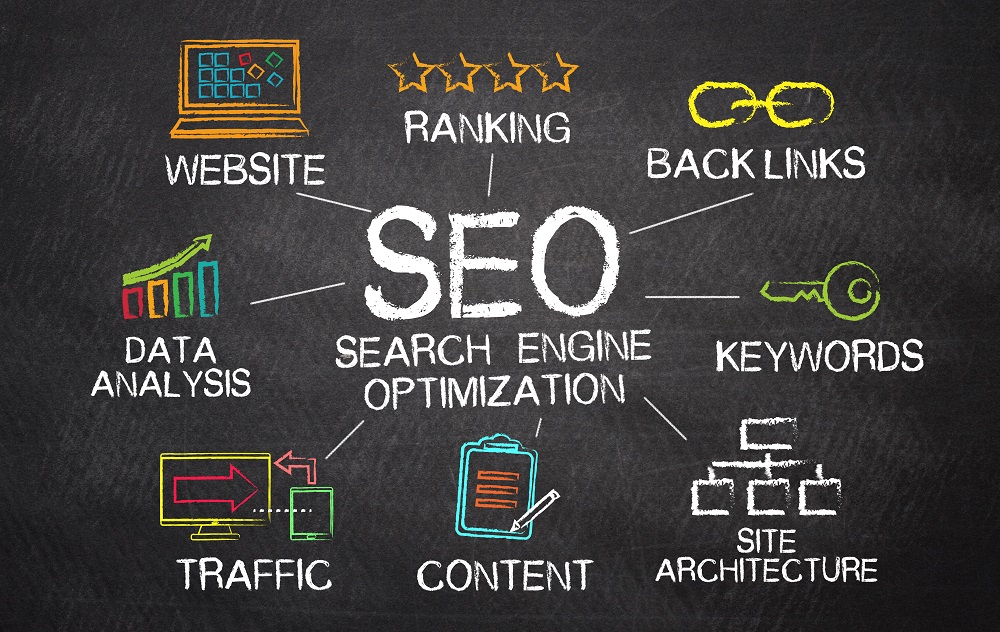
Remember, traditional SEO’s not going anywhere. There would be no discoverability without it. All the elements that come with it: keywords, backlinks, page speed, crawlability are still just as important as ever. AI-focused strategies still need a baseline, and will struggle to scale without one.
The limitation lies in what traditional SEO was designed to do. It helps pages rank. AI systems are designed to generate responses to conversational and spoken queries, which places less emphasis on direct rankings.
Why don’t keyword rankings matter as much in AI-driven search?
AI systems do not check pages solely by position. They check meaning, clarity, and trust. It might select a lower-ranking page that directly answers a question over a higher-ranking page that is less specific or harder to summarize.
That difference changes how content is evaluated.
Traditional SEO vs AI SEO: What Businesses Need to Understand
| Focus Area | Traditional SEO | AI SEO (Generative SEO) |
| Primary objective | Rank pages | Be cited in AI answers |
| Visibility type | Click-based | Zero-click and voice |
| Optimization target | Algorithms | AI language models |
| Content structure | Pages and posts | Entities and relationships |
| Success metrics | Rankings, traffic | Impressions, mentions |
Traditional SEO helps people find content. AI SEO helps machines understand and trust it.
What AI SEO Really Is and How It Works in Modern Search
AI SEO is often described vaguely, which leads to confusion.
What is AI SEO and how is it different from traditional SEO?
AI SEO is the practice of optimizing content so it can be accurately understood, summarized, and cited by AI-powered search systems. These systems don’t read content the way humans do. They analyze meaning, structure, and context to determine whether a source is reliable enough to include in an answer.
This evolution is closely tied to the rise of generative engine optimization, or GEO, which is explained in more depth in From SEO to GEO: How to Optimize for Generative AI Engines in 2025.
AI SEO focuses on helping systems answer three questions:
- What is this content about?
- Who is it for?
- Why should it be trusted?
The Core Elements That Make AI SEO Effective
- Entity clarity Clearly defining businesses, services, locations, and topics
- Structured data Using standardized formats that explain relationships between concepts
- Direct answers Providing concise explanations that match conversational and voice queries
- Topical depth Covering subjects thoroughly instead of repeating keywords
What AI SEO tools support these strategies in 2025?
Most AI SEO tools focus on entity analysis, content structure, and search visibility. The tools themselves don’t really matter; it’s about how effectively they support machine understanding, structured data, and conversational search alignment.
When it comes to AI SEO, focus on reinforcing clarity. Don’t replace your strategy, just clarify it.
How AI Uses Entities and Context to Interpret Website Content
Entities, not pages, are how AI systems understand and interpret the internet. But what is an entity? An entity can be a business, person, place, service, or concept. AI models connect entities by analyzing how the web describes and references them.
For example, a business that clearly defines its industry, services, geographic area, and expertise is easier for AI systems to understand than one that relies on vague language.
Context is the cement for those connections. The more consistent and specific the context, the easier it is for AI to summarize the information.
How AI Search Engines Choose Which Brands and Content to Cite
AI-powered search results don’t just pull information willy-nilly. They check many signals before deciding what to summarize or cite.
How does AI decide which businesses to recommend?
Most systems check sources using several overlapping signals that help determine trust and relevance.
Key Signals AI Systems Use to Select Trusted Sources
- Relevance Does the content directly answer the question being asked?
- Clarity Is the information easy to extract and summarize?
- Entity confidence Is the source clearly defined and credible?
- Consistency Do other reputable sources reinforce the same information?
- Contextual fit Does the answer match location, intent, or situation?
This explains why some pages with lower rankings still appear in AI answers. AI systems focus on usefulness and trust over position.
Why Google AI Overviews Are Reshaping Organic Search Results
What are Google AI Overviews and how do they affect SEO?
Google AI Overviews represent one of the most visible changes in search. Instead of listing links first, Google frequently presents a summarized answer generated from many sources.
These summaries often appear above traditional organic results.
For businesses, this means fewer clicks for broad informational queries and more competition for inclusion as a cited source. Choosing the right partner to navigate this shift is covered in detail in Choosing the Right AI SEO Agency in NJ: A 2026 Checklist.
Why Local Businesses Are Affected First by AI-Powered Search
How does AI change local SEO and “near me” searches?
Local search is where AI-driven answers have the biggest impact.
Many searches include implicit or explicit location signals, especially voice-based and conversational queries like “near me” or “best option nearby.” Clear geographic context helps AI systems choose accurate sources.
For New Jersey businesses, this shift makes AI-driven SEO particularly important, as outlined in What Are the Benefits of GEO and Why NJ Businesses Must Embrace AI-Driven SEO.
Common AI SEO Mistakes That Limit Search Visibility
Common mistakes include:
- Assuming AI SEO means automated content creation
- Ignoring structured data and entity signals
- Measuring success only through rankings
- Chasing short-term AI visibility tactics
- Rebranding traditional SEO without changing strategy
These approaches often increase content volume, which leads to noise reducing clarity.
How to Assess Whether Your Business Is Ready for AI Search
Businesses can assess their readiness without specialized tools by asking the same types of questions customers and voice assistants ask.
Is my website optimized for AI-generated answers?
- Can AI clearly summarize what my business does?
- Are my services and locations unambiguous?
How does AI decide which businesses to recommend?
- Does my content clearly prove expertise?
- Is my brand consistently described across the web?
Can my business appear in voice search results?
- Do my pages answer spoken, conversational questions?
- Would a voice assistant confidently mention my business?
What makes content trustworthy to AI systems?
- Is my information structured and easy to extract?
- Does my content provide direct, factual answers?
Many of these questions point toward a broader industry shift, explored further in Is GEO Replacing SEO? What Every Business Owner Needs to Know in 2025.
Key Takeaways for Businesses Adapting to AI-Driven SEO
- SEO is shifting from rankings to answers
- AI systems focus on clarity, trust, and context
- Zero-click and voice-driven visibility is becoming standard
- Entity-focused, structured content matters
- Early adaptation leads to lasting visibility advantages
The Future of SEO: From Ranking Pages to Becoming the Answer
SEO’s undergoing a serious transformation, so your business’s online presence needs to transform with it.
As AI systems increasingly mediate discovery, visibility depends less on where a page ranks and more on whether a brand is trusted enough to be summarized, cited, or recommended.
Understanding how AI interprets content is now a core part of search strategy. Businesses that adapt to this reality position themselves not just to rank, but to become answers.